
A root canal on a front tooth vs. a molar can differ significantly in complexity, treatment time, cost, and the type of restoration needed afterward. Although the basic purpose of root canal treatment is the same for every tooth, removing inflamed or infected pulp and preserving the natural tooth, the internal anatomy of front teeth and molars makes these procedures quite different.
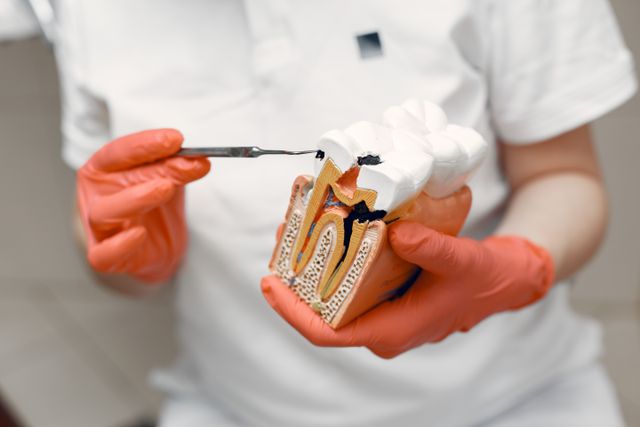
Understanding these differences can help patients know what to expect when visiting an endodontist in NYC for root canal therapy.
Understanding the Differences Between Front Teeth and Molars
Every tooth contains a pulp chamber and one or more root canals that house nerves, blood vessels, and connective tissue. When the pulp becomes irreversibly inflamed or infected because of deep decay, cracks, trauma, or other damage, root canal treatment may be necessary.
The most important difference between front teeth and molars is their anatomy.
Front teeth, including incisors and canines, generally have a single root and one root canal. Molars typically have two or three roots and may contain three, four, or even more canals.
Because each canal must be carefully located, cleaned, shaped, disinfected, and sealed, molar root canals are often more technically demanding.
Root Canal Treatment on a Front Tooth
Front teeth are primarily responsible for biting and cutting food. They are also highly visible when speaking and smiling, making their appearance an important consideration during treatment.
Simpler Root Canal Anatomy
Most front teeth have one relatively accessible canal. This can make root canal treatment more straightforward compared with treatment of a molar.
However, front teeth can still present challenges. Narrow or calcified canals, unusual root anatomy, previous dental trauma, and existing restorations may complicate the procedure.
Common Reasons Front Teeth Need Root Canals
Front teeth may require root canal therapy because of:
- Dental trauma from falls, accidents, or sports injuries
- Deep cavities that reach the pulp
- Cracks or fractures extending into the tooth
- Previous dental procedures that have affected pulp health
- Infection developing after an earlier injury
One particularly important consideration is that a front tooth injured years earlier can sometimes develop pulp problems long after the original accident.
A tooth that becomes discolored, painful, or sensitive after trauma should be evaluated, even if the injury occurred in the past.
Restoring a Front Tooth After Root Canal Treatment
Not every front tooth needs a crown after a root canal.
If sufficient healthy tooth structure remains, a permanent bonded filling may provide an appropriate restoration. Teeth with extensive damage, large existing restorations, or significant structural weakness may require a crown.
The goal is to preserve the tooth’s strength while maintaining a natural appearance.
Root Canal Treatment on a Molar
Molars are the large teeth toward the back of the mouth that grind food during chewing. They withstand substantial biting forces and have more complex internal anatomy.
Multiple Roots and Root Canals
Upper molars commonly have three roots, while lower molars typically have two. The number of canals can vary, and additional canals may be narrow, curved, or difficult to locate.
Some molars contain canals that branch, merge, or curve sharply. These anatomical variations make careful examination and treatment planning particularly important.
An endodontist’s specialized training focuses on managing these complex root canal systems.
Why Molar Root Canals Can Be More Complicated
Several factors contribute to the complexity of molar root canal treatment:
- Multiple canals: Each canal must be identified and treated appropriately.
- Curved roots: Sharp or unusual curves can make cleaning and shaping more challenging.
- Limited access: Molars are located toward the back of the mouth, where visibility and instrument access may be more difficult.
- Calcified canals: Narrowed canals can require additional time and specialized techniques.
- Existing dental work: Large fillings, crowns, or previous treatment can complicate access to the canals.
These factors help explain why molar root canals generally require more time and may cost more than treatment of a front tooth.
Why Molars Often Need Crowns After Treatment
Molars experience significant chewing pressure every day. Many molars requiring root canal treatment have also lost substantial tooth structure because of decay, fractures, or large fillings.
For these reasons, a crown or another protective restoration is frequently recommended after molar root canal therapy.
A properly designed restoration helps protect the remaining tooth structure and restore normal chewing function.
Front Tooth vs. Molar Root Canal: Key Differences
| Factor | Front Tooth | Molar |
|---|---|---|
| Typical number of roots | Usually one | Usually two or three |
| Typical number of canals | Usually one | Often three or four, sometimes more |
| Treatment complexity | Generally lower | Generally higher |
| Treatment time | Often shorter | Often longer |
| Treatment cost | Generally lower | Generally higher |
| Crown requirement | Depends on remaining tooth structure | Frequently recommended |
| Primary function | Biting and cutting | Grinding and chewing |
| Cosmetic considerations | Especially important | Usually less visible |
These are general differences. The actual treatment requirements depend on the individual tooth, its anatomy, and the extent of damage.
Does a Molar Root Canal Hurt More Than a Front Tooth Root Canal?
Patients sometimes assume that a molar root canal must be more painful because molars have more roots and canals.
However, the number of canals does not necessarily determine how painful the procedure will be.
Modern root canal treatment is performed using local anesthesia to numb the tooth and surrounding tissues. The objective is to keep the patient comfortable throughout treatment.
Some patients experience tenderness or mild discomfort after the procedure, particularly if there was significant inflammation or infection before treatment. This generally improves as the surrounding tissues recover.
The amount of post-treatment discomfort varies from person to person and is not determined solely by whether the treated tooth is a front tooth or molar.
How Long Does Each Root Canal Procedure Take?
A front tooth root canal may be completed more quickly because it usually involves fewer canals. A molar root canal can require additional time to locate and treat the entire canal system.
However, there is no universal treatment time for either procedure.
A relatively straightforward molar root canal may be completed in one appointment, while a complicated front tooth with calcified anatomy or previous trauma may require more extensive treatment.
The number of appointments depends on the condition of the tooth, the complexity of the canals, and the clinical treatment plan.
Is a Molar Root Canal More Expensive?
In general, yes. Molar root canal treatment typically costs more than treatment of a front tooth because of the additional canals, greater anatomical complexity, and time involved.
In NYC, treatment fees also vary according to the individual practice, the condition of the tooth, and whether the procedure involves an initial root canal or retreatment of a previously treated tooth.
Patients should also consider the cost of the permanent restoration, which may be billed separately from the root canal procedure.
An endodontic consultation can provide a more accurate estimate based on the specific tooth and treatment required.
Can Both Front Teeth and Molars Be Saved With Root Canal Treatment?
Yes. Root canal therapy is intended to preserve natural teeth regardless of their position in the mouth.
The long-term outlook depends on several factors, including the amount of remaining healthy tooth structure, the extent of infection, the condition of the surrounding tissues, and the quality of the final restoration.
A front tooth with extensive structural damage may have a more complicated prognosis than a relatively healthy molar, despite having fewer canals.
Likewise, a molar with a severe fracture extending below the gumline may not be suitable for root canal treatment.
The decision to save a tooth should therefore be based on its overall condition rather than its location alone.
Specialized Root Canal Treatment in Midtown Manhattan
Whether you need a root canal on a front tooth or a molar, accurate diagnosis and careful treatment are essential for preserving your natural tooth.
Young Bui, DDS and the team at Bryant Park Endodontics provide specialized root canal and endodontic treatment in Midtown Manhattan. From straightforward front tooth procedures to more complex molar root canals, the goal is to eliminate infection, relieve discomfort, and preserve natural teeth whenever possible.
If you have tooth pain, lingering sensitivity, swelling, or have been referred for root canal treatment, contact Bryant Park Endodontics to schedule an endodontic evaluation.
Bryant Park Endodontics
Young Bui, DDS
30 East 40th Street Suite 1201
New York, NY 10016
Phone: 646-205-3045
Email: Drendo4u@yahoo.com
Website: youngbuidds.com